Jump to a section 5 sections
Understand the idea
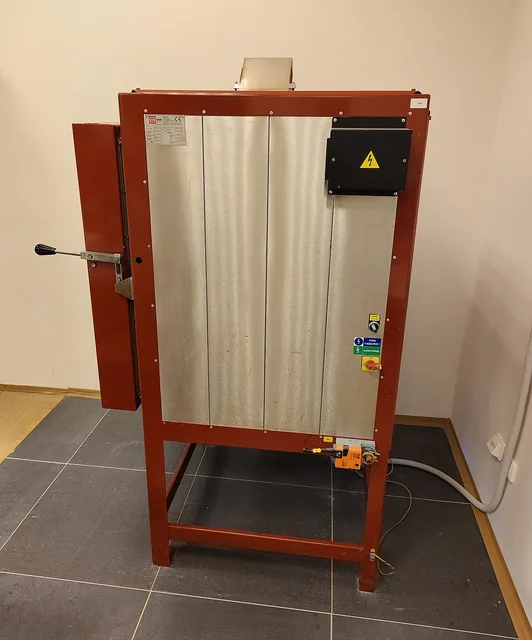
A community kiln firing service gives you a possible route from unfired clay work to a finished ceramic object without owning a kiln. The first question is whether a studio accepts work made elsewhere. If it does, the team needs to know exactly which clay and glaze you used and how the piece should be fired. This is a technical service rather than a general pottery drop-off point. It can suit home makers, people between classes or small projects that outgrow a shared studio allowance. Contact the kiln operator before making the work so that the materials, size and firing arrangements can be agreed.
Ask about materials before making the piece
Clay bodies and glazes are made for particular firing conditions. A kiln operator cannot safely infer those requirements from the colour of an unfired object. Keep the original packaging or a clear photograph of the manufacturer's product information, including the firing range. Ask which materials the studio accepts and whether it requires clay bought through its own shop. Unknown clay, mixed leftovers and unidentified glazes may be refused. That protects other people's work as well as the kiln. If you have not started your project, choosing approved materials first is much easier than trying to find a suitable firing service afterwards.
Distinguish the stages you are booking
A bisque firing and a glaze firing serve different stages of ceramic work. Some studios offer both, while others accept only work prepared to a specific point. Ask what your booking includes and whether glazing materials or supervised studio access are available separately. Firing terminology can be confusing: a cone number must be written accurately, because a leading zero changes its meaning. Let the operator confirm the required schedule from your material information rather than guessing. You are booking the studio's expertise and equipment, so clear instructions from the person running the kiln should take priority over a generic online recipe.
Prepare work for the studio to assess
Ask how dry the piece must be, how it should be labelled and whether the studio wants photographs before delivery. Thick, enclosed or unusually shaped work may need discussion well before a firing date. Glazed bases and drips also require the operator's attention. Do not try to disguise uncertain materials or existing cracks; an honest description lets the studio decide what it can accept. Transport unfired work carefully in a supported box and handle it as little as possible. Confirm who unloads the pieces at the studio, since a crowded drop-off table can be awkward for fragile handles or projecting details.
Compare fees and realistic turnaround
Firing charges may be based on shelf space, dimensions, weight or another studio system. Ask for the complete method of calculation, any minimum charge and whether test pieces cost extra. A kiln may wait for a compatible load, so the next available firing is not necessarily the day after you deliver your work. Cooling and unloading also take time. If you need the object for a gift or exhibition, give the operator the actual deadline and ask whether it is realistic. Read the studio's policy on breakage, glaze movement, unsuccessful results and uncollected work before leaving a piece with sentimental value.
Choose a useful first project
A modest test piece can tell you more than sending a large collection into an unfamiliar firing process. Discuss whether the studio recommends a sample tile or another small trial using your intended materials. Record the clay, glaze, application and firing information so that a result can be understood later. If you are new to pottery, a class with included firing may provide a clearer introduction than managing every stage independently. If you already make work confidently, a community firing service can become a practical routine. In either case, good communication with the operator matters more than finding the lowest price per piece.
You might also like to explore
Ceramics supply stores
Find clay, glazes and pottery tools that fit your studio's process. Understand firing compatibility, test pieces and product information, then copy searches for ceramics suppliers, clay retailers and glaze shops near you.
Art classes
Art classes and studio sessions can offer guided skills, a shared workspace or support for developing your own work.
Makerspaces
Compare makerspaces by projects, equipment access, induction and support. Learn how membership and machine bookings can differ, then copy targeted searches for shared workshops, digital fabrication, textiles or electronics spaces near you.
Open a guide to see what it involves and find a more specific search.
Sources and further reading
Further reading for the subjects discussed in this guide. Provider arrangements and local availability should be checked separately.