Jump to a section 5 sections
Understand the idea
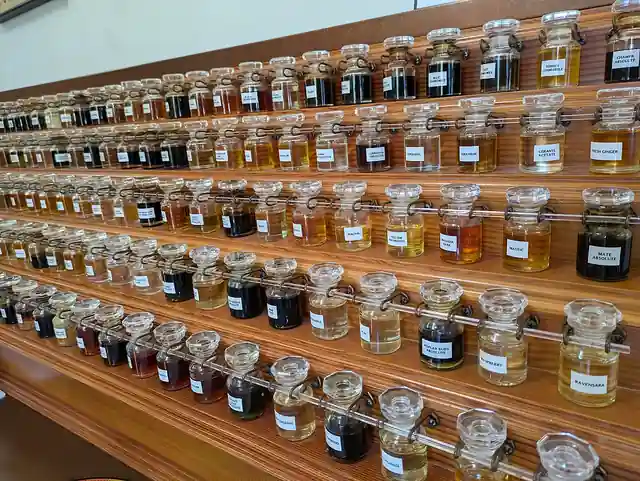
A perfume making workshop turns a familiar everyday object into something you can examine, question and make decisions about. You smell individual materials, describe the impressions they create and try a small combination under a tutor's guidance. The interesting part is often discovering that a scent you enjoy on its own behaves differently beside another one. Some sessions use a carefully limited palette of prepared blends; others introduce a wider range of perfumery materials. Choose according to how much explanation and experimentation you want, and check whether you will make a wearable perfume, a room fragrance or simply a set of scent studies.
Start with a scent brief
A brief can be as simple as wanting something fresh and green, soft and powdery, or warm without being very sweet. Everyday references help: a peeled orange, a wooden drawer or herbs after rain can be easier to explain than technical fragrance vocabulary. Bring two or three impressions, rather than expecting to reproduce a branded perfume exactly. A thoughtful teacher should help translate your idea into the materials available. The workshop becomes more satisfying when you have a direction to test and can describe why one trial feels closer than another.
Understand the workshop format
A short experience may offer several ready-made accords, which are blends designed to work as building blocks. A longer introduction may let you explore individual ingredients and keep more detailed formula notes. Neither format is automatically better; the difference is how much of the composition you control. Ask how many people share the tutor, whether everyone makes their own formula and how much time is spent blending. A demonstration followed by choosing a favourite scent is a different outing from constructing and comparing several trials yourself.
Give your nose some breathing room
Repeated smelling can make differences harder to judge. A class with pauses, fresh air and a manageable selection of materials gives you space to compare without rushing. Smelling strips let you return to a trial later and notice how its character has changed. Avoid arriving wearing a strong fragrance, and tell the organiser about scent sensitivity before booking. Materials described as natural still require appropriate handling. Wearable blends should be prepared at suitable concentrations for their intended use, with the tutor explaining handling and any relevant ingredient information.
Check what comes home with you
Confirm the bottle size, whether it is included and whether the formula is recorded so you can understand or repeat your experiment. Ask if the blend needs time before it is ready to use and what storage guidance accompanies it. Packaging can look impressive while contributing little to the teaching, so compare the actual session as well as the finished bottle. If you are booking for a group, find out whether people can choose different styles. A fragrance that delights one person can be exactly the character another person wants to avoid.
Find a session that fits your curiosity
Search for a perfume making workshop first, then narrow the results by format: beginner perfumery, small-group blending or a private fragrance lesson. Adding natural perfumery can help locate that particular approach, but it does not establish that a class is safer or more suitable for you. Look for a clear description of the materials, learning process and finished product. For a relaxed outing, one well-explained trial can be enough. If the composition process is what interests you, choose a course with time to compare formulas and discuss why they behave differently.
You might also like to explore
Art classes
Art classes and studio sessions can offer guided skills, a shared workspace or support for developing your own work.
Courses
Short courses can be a low-commitment way to discover a new interest, but the course title should translate into specific learning outcomes.
Perfume store
Perfume shops can help compare fragrance families and how a scent develops over time.
Open a guide to see what it involves and find a more specific search.
Sources and further reading
Further reading for the subjects discussed in this guide. Provider arrangements and local availability should be checked separately.