Jump to a section 5 sections
Understand the idea
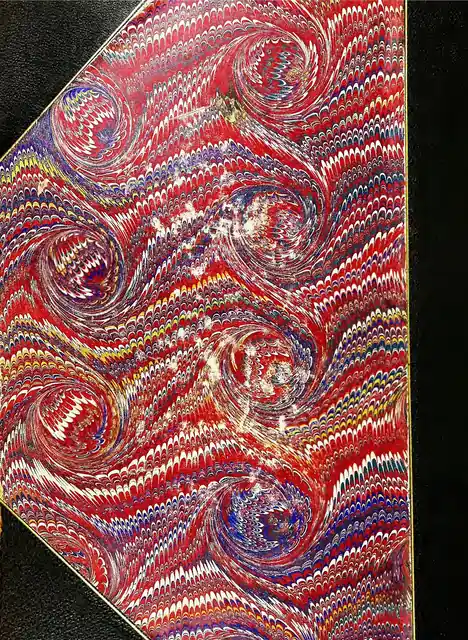
Paper marbling is a meeting of control and surprise. Colour is arranged on a liquid surface, moved into a pattern and transferred to a sheet laid carefully over it. You can make a bold pattern with a few deliberate movements, then discover tiny details that would be difficult to draw by hand. Workshops vary considerably: some teach European-style marbling on a thickened bath, while others introduce different traditions and materials. For a first visit, choose a clearly described technique and a small group with enough tray time. Several modest sheets usually teach you more than a single ambitious design made in a hurry.
Follow the pattern from bath to paper
The tutor prepares or explains the bath, demonstrates how the chosen colours behave and shows how a sheet picks up the floating pattern. Depending on the method, droplets may spread into rounded shapes or be drawn into lines with a stylus or comb. Small movements can change the whole design. Watching the sequence closely helps because the transferred print will reverse what you saw on the surface. Expect some early experiments; a pattern that looks busy in the tray may become much calmer once surrounded by the paper's margins. Leave enough unprinted space to handle the sheet safely.
Compare techniques rather than names alone
Marbling is an umbrella term, and sessions may use quite different materials. Ebru, suminagashi and contemporary acrylic marbling should not be assumed to follow the same process or produce the same look. Look at the tutor's actual examples and ask what you will learn. If delicate lines appeal to you, a workshop focused on those effects is a better choice than one built around dense, combed patterns. A teacher who explains the tradition and materials being used gives you a clearer starting point for later reading and practice.
Plan a small set of experiments
Limit your first palette so that you can see what each change does. One sheet might use a few large drops, another a gentle combed pattern, and a third a variation in spacing. This turns the workshop into a comparison instead of a scramble to use every colour. Bring an idea for the paper's eventual purpose: notebook covers, small framed prints or cards all need different usable areas. Avoid placing the most interesting detail exactly where a book cover will fold unless that is part of your design.
Ask about shared trays and drying
Find out how many participants use each bath and how many sheets you are likely to make. A class can be enjoyable with shared equipment, but long queues leave less time to experiment. Paper may need rinsing and flat drying, so confirm whether you take it away that day or collect it later. The fee should explain whether materials and any mounting or finishing are included. A folder or rigid carrier is helpful once the work is dry; loosely rolling a fresh print may make later framing or binding more difficult.
Make the next session more specific
After a taster, you may discover that preparing the bath interests you as much as making the pattern. A longer course can spend time on that preparation, paper treatment and consistent results. Alternatively, keep the activity as a satisfying occasional outing and use your sheets in another craft. When searching, include the technique or intended use rather than relying only on paper art. Recent examples of student work are especially helpful: they show the scale and complexity that beginners actually achieve, rather than only the instructor's most elaborate pieces.
You might also like to explore
Art classes
Art classes and studio sessions can offer guided skills, a shared workspace or support for developing your own work.
Art supply stores
Art-supply shops can help match materials to a medium, surface and skill level.
Courses
Short courses can be a low-commitment way to discover a new interest, but the course title should translate into specific learning outcomes.
Open a guide to see what it involves and find a more specific search.
Sources and further reading
Further reading for the subjects discussed in this guide. Provider arrangements and local availability should be checked separately.