Jump to a section 5 sections
Understand the idea
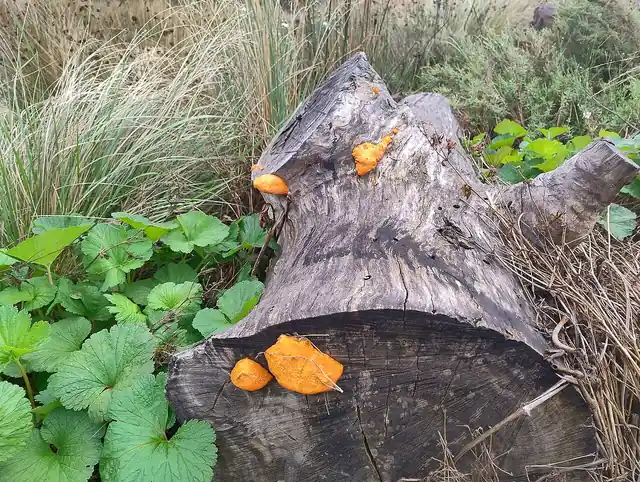
A mycology club is a place to learn about fungi as living parts of woods, grasslands, gardens and other habitats. A guided walk might spend a surprising amount of time around one log, comparing shapes and asking what the fungi are growing on. Many groups are interested in recording, photography and ecology rather than gathering food. That makes the hobby suitable for people who enjoy close observation and are happy to slow down outdoors. Choose an explicitly beginner-friendly event, because some specialist meetings assume experience. Treat any identification discussion as learning, never as permission to eat a fungus you have found.
What makes a fungus walk different
A fungus walk often covers less ground than an ordinary ramble because the group stops frequently. Participants may examine a fallen branch, compare fungi on different trees or discuss a small specimen that is easy to overlook. Ask about the event's purpose: a public introduction, a recording foray and a specialist workshop can require different levels of knowledge. A beginner session should explain what people are observing and give you time to ask questions. If you mainly want photographs, check whether the pace allows that. The most memorable part may be noticing details in a familiar place that you have always walked past.
Keep observation separate from eating
Fungi can be difficult to identify, and names alone do not make something safe to consume. Do not eat a specimen based on a photograph, an app result or an overheard conversation during a walk. A group may discuss lookalikes or uncertain identifications for educational reasons without making any food recommendation. Ask whether the club has a clear collecting and safety policy before attending. Keep children and pets from tasting anything found on the route. If your interest is specifically growing edible mushrooms, a cultivation class using labelled supplied material is a separate activity with a different purpose and set of instructions.
Record more than the cap
A useful observation includes the setting as well as the fungus. The leader may ask you to note the type of habitat, nearby trees, what the specimen is growing on and the date. Photograph it in place before any permitted handling, following the organiser's directions. A single picture from above may omit features that matter to identification. Do not pull up or cut specimens simply to improve a photograph. Some groups collect limited material for expert study under agreed permissions; others keep public walks entirely observational. Follow the event's method rather than assuming that every participant should take a sample home.
Choose a comfortable first outing
Check the route, ground conditions and meeting point carefully. Fungi can draw a group toward damp, uneven or shaded places, and a short distance does not guarantee easy access. Ask about seating opportunities, toilets and whether people can leave early if necessary. Bring the clothing and simple equipment the organiser recommends, with a charged camera or phone if you want to keep records. You do not need a microscope for your first walk. Indoor talks, photographic meetings and beginner identification demonstrations can offer a useful starting point when outdoor conditions or mobility make a field outing difficult.
Find a group you can learn with
Search for mycology societies as well as fungus groups, since clubs use different names. Look for recent events and an explanation of how newcomers can attend; some require advance booking even when the walk is free. Ask whether the group welcomes complete beginners throughout the year or runs specific introductory dates. A longer-term interest might lead to ecological recording or microscopy, but there is no need to choose a specialism immediately. Repeated visits to the same accessible area can be rewarding. You begin to recognise habitats and seasonal changes while gradually learning which observations the group finds useful.
You might also like to explore
Nature trails
A walking route can be chosen for forest scenery, waterside views, local history or simply a comfortable loop.
Citizen science groups
Find groups contributing observations to organised research. Compare guided surveys, regular monitoring and beginner projects, then learn what good records involve, how training works and why following a project’s method matters more than collecting impressive numbers.
Courses
Short courses can be a low-commitment way to discover a new interest, but the course title should translate into specific learning outcomes.
Open a guide to see what it involves and find a more specific search.
Sources and further reading
Further reading for the subjects discussed in this guide. Provider arrangements and local availability should be checked separately.