Jump to a section 5 sections
Understand the idea
A music rehearsal room gives a band, singer or instrumentalist a place to practise without trying to make a living room behave like a studio. Rooms range from a simple space you equip yourself to a setup with drums, amplifiers and a vocal system already in place. The right choice depends on what you play, how many people are coming and what you can carry. A rehearsal booking usually gives you time and space, not a producer or an engineer. Check the equipment list and access arrangements, then choose one clear goal for the session so that setting up does not consume the entire booking.
Read the equipment list item by item
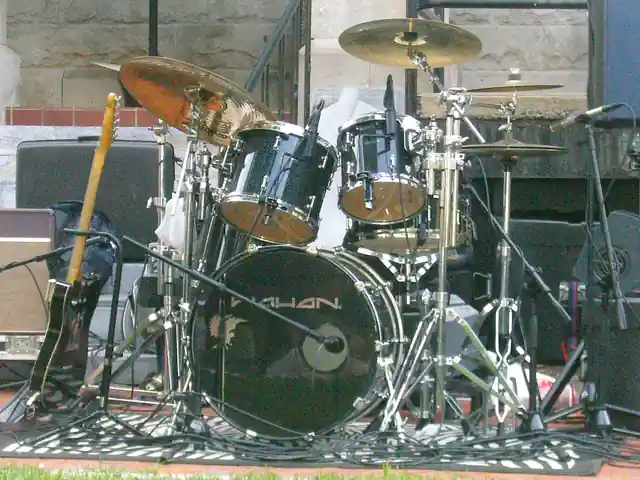
The word backline can cover different things at different studios. One room may include guitar and bass amplifiers plus a drum kit; another may provide only some of those items. Ask about cymbals, pedals, drumsticks, microphones, stands and cables rather than assuming they are included. Keyboard players should check whether an instrument is supplied and what connections are available. If you need a particular sound for a show, confirm the model or bring the equipment that matters most. A photograph of the room is useful, but a current written inventory is a better guide to what will be waiting when you arrive.
Choose enough space for the people
A room's capacity is more than the number of chairs it can hold. Musicians need room for instruments, cases, microphone stands and clear routes to the door. Ask for dimensions or a layout if several people are attending. A solo singer practising with a backing track has different needs from a drummer and amplified band. Consider ventilation, seating and whether a control area or adjacent room takes space away from the playing area. If someone needs step-free access, check the complete route from arrival to the room, including lifts, door widths and toilets, rather than relying on a general accessibility label.
Plan the session around one purpose
Decide whether you are learning material, tightening transitions, rehearsing a set or trying new arrangements. Send the songs and starting versions to the group beforehand so everyone prepares the same material. Allow time to set levels and agree a comfortable working volume; hearing protection is a sensible part of a musician's kit. A simple running order keeps the session from becoming repeated discussion about what to play next. If you want a rough recording to review afterwards, ask about permissions and available equipment. Recording a rehearsal for reference is different from booking a recording session with an engineer and production facilities.
Allow for loading and changeover
Find out when your paid time begins and whether packing away is included within it. A two-hour booking can feel short if half the group arrives late and there is a long route from the car to the room. Check parking, loading restrictions, public transport and the process for collecting keys or entering the building. Ask who to contact if a supplied amplifier or microphone does not work. Leave the room in the required condition, with equipment returned to its place. A clear finish time helps the next group start promptly and avoids unexpected charges for running beyond the booking.
Choose a booking pattern you can sustain
A one-off room is useful for trying a new band or preparing for a specific performance. A regular slot can make it easier to keep a group together, but check cancellation rules before committing to a recurring arrangement. Some studios offer storage; ask exactly what is stored, who has access and what the agreement covers. If you are still finding collaborators, a rehearsal complex may have noticeboards or community events, though room hire itself does not provide bandmates. Start with one suitable session and review what worked. The best room is the one that lets your group spend its time making music.
You might also like to explore
Music school
Music schools can offer instrument lessons, singing, theory and ensemble playing.
Recording studio
Recording studios offer spaces, equipment and engineering support for different kinds of audio.
Music band
Hiring musicians or a band involves repertoire, ensemble size and the practical needs of live performance.
Open a guide to see what it involves and find a more specific search.
Sources and further reading
Further reading for the subjects discussed in this guide. Provider arrangements and local availability should be checked separately.