Jump to a section 5 sections
Understand the idea
A model railway club brings together people who enjoy building miniature places, making trains run and solving the practical problems that connect the two. You do not have to arrive with a complete layout or a collection of locomotives. A club may need scenery makers, patient organisers, people interested in real railway history and beginners willing to learn. The experience depends on the group: some work on a permanent shared layout, others build portable sections or meet to discuss individual projects. Visit with curiosity and a description of what interests you, then find out how a new member can contribute at a manageable level.
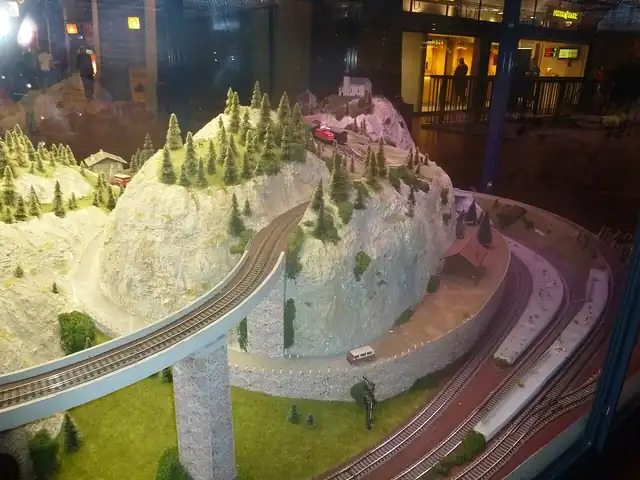
Find out what members actually do together
A club photograph of a finished layout does not show how ordinary meetings work. Ask whether sessions centre on construction, maintenance, running trains, talks or preparation for exhibitions. A group building a new layout may need different help from one mainly operating an established system. If you enjoy painting buildings or researching a historical setting, say so even if the electrical side is unfamiliar. Model railways combine several crafts, and a useful club introduction explains those roles instead of implying that every member must immediately know how to do everything.
Understand scale and gauge before buying equipment
Scale describes how the model's size relates to the real subject, while gauge concerns the spacing of the rails. The distinction matters because products need to suit the layout where they will run. The National Model Railroad Association's beginner material explains that choosing a scale affects space, available models and the character of the project. Ask the club which scales and systems it uses before buying a locomotive for club running. Even if you prefer another scale at home, the group may still welcome your scenery skills or interest in operating sessions.
Choose between a shared layout and personal projects
A permanent club layout lets members work on a project larger than many could accommodate at home. A modular approach can allow separate sections to be assembled together, but it needs agreed dimensions and connections. Other clubs focus more on showing progress, exchanging advice and visiting members' layouts. Ask what commitment each format involves and whether you need somewhere to store your own work. A small building, scenic corner or carefully defined repair can be a satisfying first contribution without requiring you to take responsibility for a whole section of railway.
Try an operating session with guidance
Running trains can mean more than watching them circle a track. Some groups organise movements around a timetable or a sequence of jobs, which creates a shared activity involving communication and attention. A newcomer can ask for a simple role and a demonstration of the controls used on that layout. Do not assume your own model can be placed on a club track without checking compatibility and the group's procedure. A helpful first session explains both the equipment and the social rhythm, so questions feel like part of learning rather than an interruption.
Check the practical rhythm of membership
Ask when visitors are welcome, whether there is a trial visit and how membership contributions support the premises or projects. Find out whether attendance is flexible and whether exhibition weekends require additional help. Access to the clubroom, seating at work areas and the lighting for close work can matter as much as the size of the layout. Search using model railway or model railroad according to the terminology common around you, then add a scale or beginner focus if needed. The right club gives you enjoyable work to return to, at a pace you can sustain.
You might also like to explore
Model store
Model and remote-control shops serve different scales, power systems and levels of building experience.
Hobby Store
Craft and hobby shops can introduce a new activity through a manageable first project.
Library
Libraries can offer books, study space, workshops, language groups and access to information beyond lending alone.
Open a guide to see what it involves and find a more specific search.
Sources and further reading
Further reading for the subjects discussed in this guide. Provider arrangements and local availability should be checked separately.