Jump to a section 5 sections
Understand the idea
Handmade paper begins as wet fibres and ends as a sheet whose thickness, surface and edges reflect the way it was formed. In a workshop you might lift prepared pulp on a mesh screen, transfer the wet sheet and explore what happens as water is removed. It is an absorbing way to think about an ordinary material: a writing sheet, a translucent sample and a textured piece for a collage can all start from different choices. Most introductory sessions prepare the pulp in advance. That leaves time for making several sheets, comparing the results and learning how to handle paper before it is dry.
What you actually make
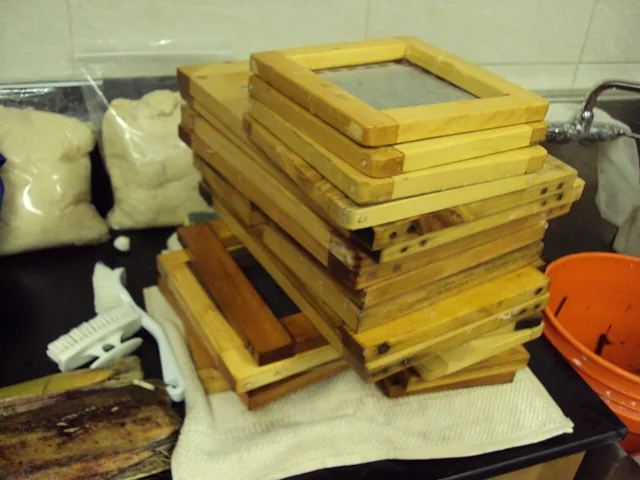
A paper workshop usually centres on sheet formation, rather than producing pulp from raw plants. The mould supports a fine screen; a separate frame, often called the deckle, helps define the sheet's shape. Lifting it through a vat gathers a layer of fibres. You then transfer the fragile sheet onto a suitable surface before pressing or drying it. Watching a tutor is useful, but repeated attempts are what make the process understandable. An uneven first sheet gives you something concrete to compare with the next one. Keep both sheets to compare once they are completely dry.
Choose a purpose for your paper
Think about how you would like to use the result. Cards and collage papers can tolerate a texture that might be awkward for small handwritten text. A sheet intended for drawing raises different questions about absorbency and surface finish. Ask whether the workshop produces decorative samples or paper suited to a particular use. Inclusions such as thread or petals can be attractive, but too many may interrupt the surface. It is worth making one fairly plain sheet alongside more experimental versions so you can judge the material itself.
Recycled fibres and plant fibres
A recycled-paper class may use prepared waste paper, while an artist-led course might introduce cotton, linen or other fibres. These are useful differences to ask about because they affect the process and appearance. A title such as plant papermaking does not necessarily mean you will gather, process and beat the plant during a short visit. Ask which stages are demonstrated and which you complete. You do not need to master the entire production chain to enjoy forming a sheet, but the description should make clear what the day actually includes.
Water, drying and getting work home
Papermaking is a wet activity, and sheets may need longer to dry than the workshop lasts. Confirm whether you collect finished paper later, receive it by post or take wet sheets home with instructions and a supporting board. Wear clothes that can tolerate splashes and ask about aprons or waterproof surfaces. People who prefer seated work should check the height of the vats and whether the lifting stage can be adapted. These small arrangements can determine whether the experience feels comfortable and whether your newly made sheets survive the journey.
Look beyond a single finished sheet
A good introductory session helps you notice the relationship between the pulp, the lift and the surface that remains. You might compare a thin and thick sheet, two colours or different ways of drying. Keep simple notes or photographs so that the differences remain meaningful later. For a one-off outing, several small samples offer plenty to explore. If you want to continue, ask about access to shared equipment and the space needed for drying at home. A follow-up book arts or printmaking session gives your paper a practical next use.
You might also like to explore
Art classes
Art classes and studio sessions can offer guided skills, a shared workspace or support for developing your own work.
Craft stores
Craft and hobby shops can introduce a new activity through a manageable first project.
Book restoration
Explore conservation, repair and rebinding for damaged or valued books. Understand how preserving original materials differs from creating a durable working copy, and find appropriate help for bindings, pages, albums and protective boxes.
Open a guide to see what it involves and find a more specific search.
Sources and further reading
Further reading for the subjects discussed in this guide. Provider arrangements and local availability should be checked separately.