Jump to a section 5 sections
Understand the idea
A bread baking class helps you connect a recipe with what dough actually looks and feels like as it changes. An instructor can show you the difference between mixing, developing structure, allowing fermentation and shaping a loaf, then help you recognise those stages in your own work. The best starting point depends on what you want to bake regularly: an everyday yeasted loaf, sourdough, flatbread or enriched buns. Choose a class that explains its schedule as well as its menu. Some dough must be prepared ahead, so it is useful to know which stages you will perform and which you will observe.
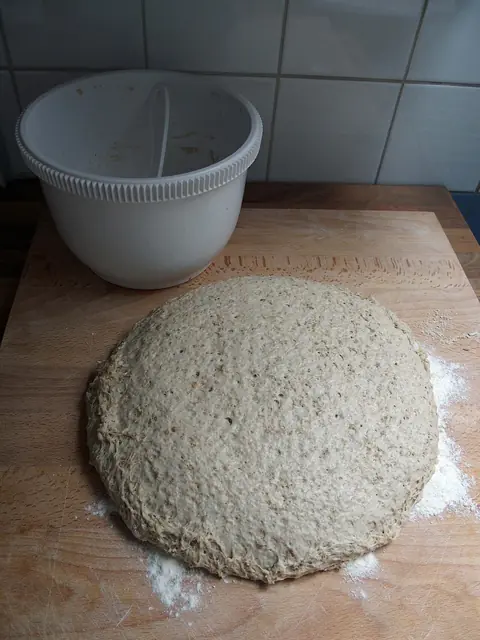
Start with the bread you want to make again
A basic yeasted bread class can concentrate on mixing, handling and shaping without also asking you to maintain a starter. Sourdough instruction adds starter care and a different way of organising fermentation. Enriched dough introduces ingredients such as butter or eggs and may focus on buns or braided breads, while flatbread classes explore another set of shaping and cooking choices. None is automatically the best beginner option. Pick something you enjoy eating and can imagine repeating, then ask how much previous experience the class assumes.
Ask how the class handles the waiting stages
Bread takes time between the moments when you actively work on it. Instructors may use dough prepared before the session so that participants can see several stages in one visit. That is a sensible teaching device when it is explained clearly. Ask whether you mix your own dough, shape a prepared batch, bake on site or take something home to finish. A good schedule leaves room to compare dough at different stages, rather than treating the pauses as empty time or rushing a loaf simply to fit the clock.
Learn to observe dough, not only follow minutes
Useful teaching draws attention to texture, elasticity, volume and how a dough responds when handled. A written recipe supplies a framework, but ingredients and working conditions can change how that framework plays out. Ask whether the instructor discusses these observations and lets you practise shaping more than once. Seeing several participants' loaves can be especially helpful: small differences become something to discuss rather than a private failure. Bring questions from your own baking, such as dough that spreads or a loaf you find difficult to shape, with photographs if available.
Connect the classroom to your home kitchen
A professional teaching kitchen may have mixers, ovens and work surfaces unlike yours. Before booking, check whether the course explains how to adapt its workflow to ordinary home equipment. For sourdough, ask what starter care is taught and whether any starter is provided. For all classes, clarify ingredients and allergen arrangements beforehand, including shared flour handling. Take-home dough or baked goods should come with the organiser's relevant instructions. A useful course gives you enough context to repeat its lesson without assuming you own every tool seen in the classroom.
Choose participation and feedback over a long menu
Making two breads with time for questions may teach more than briefly watching six. Compare how many people share a workstation, whether everyone handles dough and whether written notes explain the process. If you mainly want an enjoyable social session, a short workshop may be ideal; if you want consistent results, a sequence of lessons with practice between them can be more useful. Search by bread style and beginner or advanced level. A bakery tour offers another perspective, but it is not a substitute for the practical feedback of a class.
You might also like to explore
Cooking school
Cooking schools can teach a cuisine, a technique or a complete menu.
Bakery
A bakery visit can be about everyday bread, a particular pastry or a celebration order.
Courses
Short courses can be a low-commitment way to discover a new interest, but the course title should translate into specific learning outcomes.
Open a guide to see what it involves and find a more specific search.
Sources and further reading
Further reading for the subjects discussed in this guide. Provider arrangements and local availability should be checked separately.