Jump to a section 6 sections
Understand the idea
Board game rental lets you try an unfamiliar game, prepare for a gathering or test whether a title deserves a permanent place on your shelf. Some services lend individual boxes for home use; others offer a party bundle or a membership-based collection. Libraries and community lending schemes may provide a similar opportunity under their own borrowing rules. The most useful choice fits the people who will actually play, including their patience for learning rules and the time available. Start with one or two well-matched games, check the contents and agree the return arrangements before planning the evening around them.
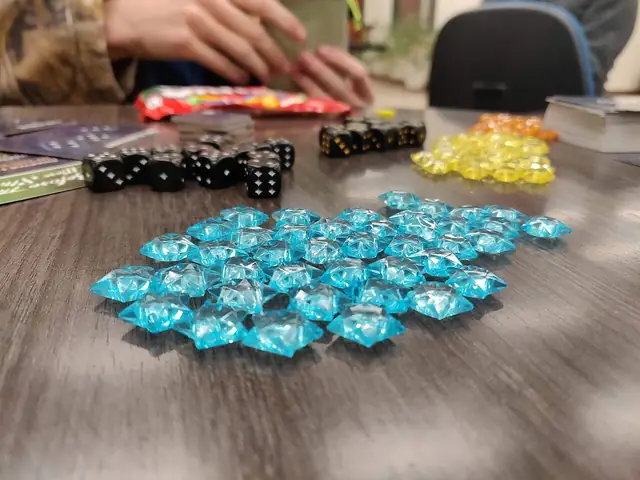
Choose for the people at the table
Count the likely players and ask how the game behaves at that number, rather than looking only at the range on the box. Consider whether everyone reads the same language, enjoys direct competition or would prefer working together. A familiar theme does not necessarily mean simple rules. Tell the lender about the group’s experience and ask for a short description of a typical turn. For a mixed gathering, a game that allows conversation between turns may suit the occasion better than one requiring constant concentration.
Budget time for learning and playing
The printed playing time may not include unpacking, teaching, finding missing setup pieces or discussing a first turn. Leave a comfortable margin when borrowing a game for a specific evening. Ask whether a rules explanation, summary sheet or link to the publisher’s instructions is available. If you are hosting, read the rules before guests arrive and set up the starting position if practical. Choose a shorter backup activity so that the whole gathering does not depend on learning one complicated game successfully.
Check what the lending service actually offers
A paid rental, a public-library loan and a game café’s on-site collection are different arrangements. Ask whether the box can leave the premises, how long it can be kept and whether membership or proof of address is required. Find out whether a reservation guarantees a particular title or only a similar substitute. Party bundles can be convenient, but request the individual titles and player requirements. A smaller selection that suits your group is usually easier to organise than a large collection with no clear teaching plan.
Count components at the right moments
Follow the lender’s inventory or packing guide when collecting the game. If a box is sealed, ask how to report a missing or damaged component discovered when opening it. Keep small pieces away from food, drinks and young children who may put them in their mouths. Use the supplied bags or trays to separate components while playing, and check the table and floor before packing. Take note of existing wear so there is no confusion on return. Do not mark cards or replace a missing piece without the lender’s agreement.
Understand deposits and return rules
Confirm the total rental charge, any deposit, late fees and the exact return deadline. Ask what happens if the shop is closed at the end of the borrowing period or if a scheduled event is cancelled. Understand the policy for damaged packaging and missing components before accepting the game. Some titles contain consumable or permanently altered elements, so check that the supplied edition is suitable for repeated lending and ask which materials may be written on. Keep a record of collection and return, especially for a larger event order.
Use the loan to discover your preferences
After playing, consider what people enjoyed: the theme, teamwork, short rounds, negotiation or the chance to build something gradually. Those observations make the next choice easier, even when the first game is not a favourite. If you are considering buying it, ask whether the rental service has a purchase arrangement without assuming that the hire fee will be deducted. Local availability changes as boxes circulate, so contact the lender with a little notice. Search for lending libraries as well as commercial rental if the first results are limited.
You might also like to explore
Board game stores
Board-game shops can help you discover games by player count, time and style rather than by a familiar title.
Toy libraries
Explore toy borrowing for changing interests and stages of play. Compare age guidance, accessible play materials, loan arrangements, cleaning instructions and missing-piece policies before choosing a collection that suits your family’s everyday routine.
Games store
Board-game shops can help you discover games by player count, time and style rather than by a familiar title.
Open a guide to see what it involves and find a more specific search.
Sources and further reading
Further reading for the subjects discussed in this guide. Provider arrangements and local availability should be checked separately.