Jump to a section 5 sections
Understand the idea
At a board game playtesting event, you sit down with a game that is still being developed. The cards may be handwritten, the artwork temporary and the rules open to change. Your role is to play attentively and describe your experience so the designer can learn what works. This can be an absorbing alternative to a standard game night, especially if you enjoy seeing how decisions and rules fit together. You do not need to be a designer yourself. Look for an event that welcomes new testers, explains the expected session length and makes it easy to choose a game suited to your interests.
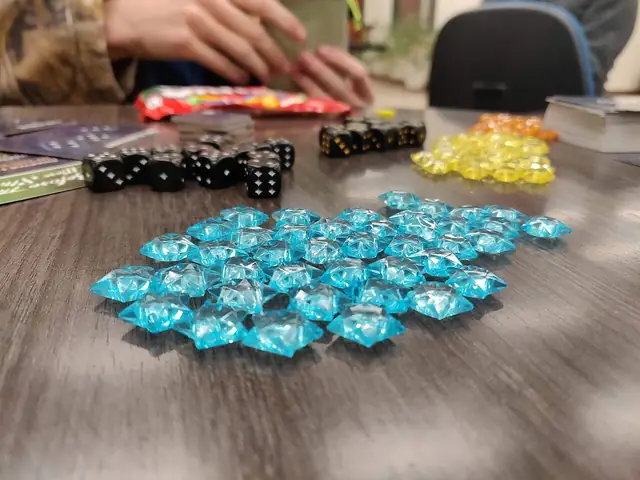
Expect a work in progress
A prototype is not a finished product with the polish temporarily removed. Its structure may still be changing, and a session might stop early when the designer has learned what they needed. You could be asked to replay an opening, try a different rule or explain what you think a card means. That is part of the event, not necessarily a sign of poor organisation. Ask what stage the game has reached and what the designer hopes to test. If you mainly want a complete evening with a familiar published game, an ordinary board game group may suit that occasion better.
Pick a table that fits your evening
Check the expected playing time, number of players and level of complexity before joining. Include time for explaining the rules and discussing the experience afterwards. A short card game and a lengthy strategy prototype require different commitments. Tell the organiser if you need to leave at a particular time so they can place you appropriately. You may be able to choose a theme or mechanism you enjoy, but trying an unfamiliar design can also be interesting. If the subject matter or player interaction makes you uncomfortable, it is reasonable to ask for another table before the test begins.
Give the designer useful observations
Specific experiences are more helpful than a quick verdict. You could explain that you did not understand a symbol, that one decision felt exciting or that you spent a long time waiting between turns. Describe what happened before suggesting a complete redesign. The designer may already be testing one particular question and can explain which feedback is most useful. Be honest without being dismissive: an unfinished game represents someone's effort, and a respectful conversation is more likely to reveal the problem clearly. Mention things you enjoyed as well as difficulties so that useful parts are not lost during later changes.
Ask how the event handles prototypes
Find out whether photographs, recordings or public posts are welcome. Designers may be happy to share their work, but permission should be explicit, particularly when rules or artwork are unfinished. Do not publish someone else's files or copy their prototype without agreement. Some events use written feedback forms; others rely on a discussion at the table. Follow the event's code of conduct and ask the host if a session becomes uncomfortable. If you also have a game of your own, confirm the designer registration process. Arriving as a tester does not always include space or permission to run your own table.
Try one session before committing to more
A local design meetup, a dedicated playtesting day or a convention prototype area can each provide an introduction. Search event listings as well as map results because many groups meet in borrowed rooms rather than a permanent venue. Confirm the date and whether advance registration is required. Bring glasses or other items you normally need for tabletop play; components may be less readable than a published game's final design. After a session, make a note of which types of testing you enjoyed. You might discover that spotting unclear instructions is just as satisfying as finding a clever strategy within the game.
You might also like to explore
Board game stores
Board-game shops can help you discover games by player count, time and style rather than by a familiar title.
Tabletop game stores
Board-game shops can help you discover games by player count, time and style rather than by a familiar title.
Games
A good day out starts with the kind of experience you want: making something, solving something, watching a performance or exploring a place.
Open a guide to see what it involves and find a more specific search.
Sources and further reading
Further reading for the subjects discussed in this guide. Provider arrangements and local availability should be checked separately.