Jump to a section 5 sections
Understand the idea
Basket making combines a clear structure with a surprisingly lively material. Prepared willow, cane or another suitable fibre bends around a framework, gradually turning a flat base into something that can hold objects. The rhythm is satisfying, but the work also asks you to watch the shape from several angles and respond when a material resists. A beginner workshop might offer a small round basket, shallow tray or simple decorative form. Choose by the material and project, rather than by the word weaving alone. The teacher's preparation and the size of the object make a substantial difference to what you can comfortably finish.
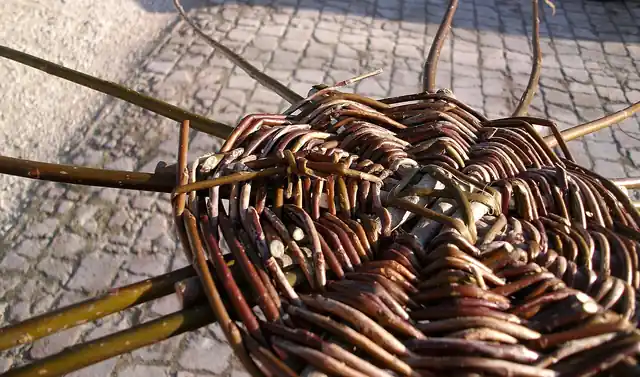
Understand the structure you are building
A basket needs a base, a shape that remains reasonably even and an edge that finishes the work securely. The workshop's technique determines how these parts connect. Early stages can feel awkward because the developing structure is not yet stable; this is where a nearby tutor is particularly valuable. Ask whether you will make the base yourself or begin with one that has already been prepared. A pre-started project is a reasonable choice for a short taster, while a longer class can explain the complete sequence from the first supporting elements onward.
Let the material influence your choice
Willow rods, flat cane and other basketry materials differ in stiffness, preparation and appearance. A photograph of a delicate finished basket does not tell you how much hand effort it took to make. Check which material the class uses and whether it is already prepared for weaving. Gathering and preparing plant material can be a separate skill and may be outside the scope of a one-day session. If you want to explore that stage, look for a course that explicitly includes material selection and responsible preparation rather than assuming every basketry class covers it.
Keep the first shape manageable
A shallow tray or small open basket gives you room to learn the rhythm without adding complicated handles or lids. An ambitious picnic basket may require several sessions and more individual help. Look for a course description that names the finished object and explains whether beginners regularly complete it in the available time. It can be useful to take photographs as the form develops. Seeing the earlier stages makes it easier to understand later why one side widened more quickly or why the rim ended up with a slight tilt.
Ask about hands, seating and tools
Basketry can involve pulling, bending and holding material under tension. Discuss the actual project if grip strength or repeated hand work is a concern. A tutor may suggest a different material or smaller object. Check whether you work at a table, on a low support or partly standing, and whether breaks are included. Cutting tools should be introduced and supervised appropriately. For a family booking, confirm the youngest age the teacher accepts for that particular technique; a child-friendly paper weaving activity is not interchangeable with working stiff rods and sharp cutters.
Take home more than a finished container
Ask how the basket should dry and be stored, especially when the materials were damp during weaving. Its intended use matters: a decorative first basket is not automatically suitable for carrying heavy loads or holding food directly. Keep the name of the material and the technique with a photograph of your work. If you enjoyed the process, a local basketry group can offer demonstrations and a route into longer projects. Searching for the specific material or object helps you find a class that develops the part you liked, whether that is precise repetition, sculptural form or working with natural textures.
You might also like to explore
Art classes
Art classes and studio sessions can offer guided skills, a shared workspace or support for developing your own work.
Craft stores
Craft and hobby shops can introduce a new activity through a manageable first project.
Courses
Short courses can be a low-commitment way to discover a new interest, but the course title should translate into specific learning outcomes.
Open a guide to see what it involves and find a more specific search.
Sources and further reading
Further reading for the subjects discussed in this guide. Provider arrangements and local availability should be checked separately.